Chapter 2 Automated Market Maker (AMM)
Long before crypto existed, financial markets relied on order books–lists of buy and sell orders waiting to be matched. If you wanted to buy NVIDIA (NVDA) stock, you needed someone willing to sell at your price (and vice versa). Automated market making changed that. Instead of matching buyers with sellers, an AMM uses a liquidity pool–a smart contract holding two tokens–and a mathematical formula to determine their exchange rate. There are no counterparties, no order books, and no waiting for a match. You can buy tokenized NVIDIA stock at any time, 24/7, from anywhere in the world by simply depositing USDC into an on-chain USDC-NVDAx pool and withdrawing NVDAx7. The price you receive is determined by the pool’s current token ratio: the less NVDAx there is relative to USDC, the higher the price of NVDAx. Uniswap popularized this mechanism, and today AMM-based DEXs account for the majority of on-chain trading volume.
2.1 The Mechanism
Let’s look at a concrete pool to make this more tangible: the 0.05% fee-tier WETH8-USDC Uniswap v3 pool9 on the Arbitrum chain. At the time of writing, this pool held 14,925 WETH and 21,419,604 USDC, with an internal ETH price of $2,314.79. By the time you read this, these numbers will almost surely have changed, so check them again. If the amount of ETH has fallen while the amount of USDC has risen, the pool’s ETH price should be above $2,314.79. If the amount of ETH has risen while the amount of USDC has fallen, it should be below $2,314.79.
Then compare the pool’s ETH price with the external market price on a centralized exchange (CEX) such as Binance. Are they the same? If not, which would be better for buying or selling ETH?
If you have never made an on-chain swap before, now is a good time to do so. Go to Uniswap and swap a small amount of USDC for ETH. Before clicking the Swap button, take a screenshot of the UI showing how much ETH you are expected to receive. After signing the transaction, check exactly how much ETH you received. You will notice that the two numbers are slightly different. This difference is called slippage, and it can become costly if you are not careful–especially when trading in size or swapping long-tail tokens.
💡 What is slippage?
Slippage is the change between a swap’s quoted price and its executed price, caused by market movement between the moment the trade is submitted and when it is confirmed on-chain. Positive slippage means your trade is executed at a better price, while negative slippage means it is executed at a worse price.
Most DEXs allow users to set a maximum slippage tolerance–for example, the default value on Uniswap is 2.5%–to prevent trades from being executed too far from the quoted price. Setting it too high can lead to poor execution prices, while setting it too low can cause trades to fail if the price moves beyond your tolerance before confirmation. In practice, the optimal setting depends on the token pair, market conditions, and trade size. You can further minimize slippage in five ways:
- Trade in pools with deep liquidity. A $50M pool is deeper than a $10M pool, which is deeper than a $1M pool.
- Break large trades into smaller chunks. Smaller swaps reduce price impact.
- Trade during calm market conditions. Slippage tends to be lower when prices move slowly and volatility is low.
- Use limit orders when available. This lets you specify the exact price at which your trade executes.
- Use aggregators. These automatically route swaps through AMMs with the deepest available liquidity to minimize slippage.
Now that you know how to manage slippage, let’s look under the hood and see what happens when you swap USDC for ETH on an AMM-based DEX:
Swap: You submit a transaction to deposit USDC and withdraw ETH. The transaction is routed through the most competitive WETH-USDC pool.
Balance change: Your USDC flows into the pool, while ETH flows out to your wallet, leaving the pool with more USDC and less ETH than before.
Price adjustment: The AMM’s formula automatically raises the price of ETH in the pool. This higher price discourages further ETH purchases and encourages users to sell ETH into the pool or add ETH liquidity.
When someone swaps ETH for USDC, the same logic applies in reverse–ETH enters the pool, USDC leaves, and the pool price of ETH falls. This lower price discourages further ETH sales and encourages users to buy ETH from the pool or add USDC liquidity.
Now consider what happens when the external market price of ETH jumps sharply:
Market price rises: The price of ETH jumps on CEXs, where order books update in milliseconds.
DEXs lag behind: The pool’s internal ETH price does not change on its own–it only moves when someone makes a swap. For a brief moment, ETH in the pool is cheaper than ETH on the open market.
Arbitrage: Bots detect the price gap and buy cheap ETH from the pool, then sell it on CEXs for a profit. Each arbitrage swap pushes the pool’s ETH price higher.
Impact on liquidity positions: While this is happening, arbitrage bots are trading directly against LPs. Each swap buys ETH from in-range positions and leaves USDC in its place, gradually shifting those positions’ token composition from ETH toward USDC as the price climbs through their ranges. Once the price crosses a range’s upper bound, that position’s liquidity is no longer active in swaps. The conversion stops. The position remains frozen at 100% USDC, earning no fees, until the price re-enters its range or the LP closes it.
Pool price catches up: After enough arbitrage activity, the pool’s ETH price roughly matches the market price. The arbitrage opportunity disappears.
The same logic applies in reverse when ETH’s market price falls: bots buy ETH on CEXs and sell it into AMM pools until the price gap closes.
💡 Watching Arbitrage in Action
You can observe CEX-DEX arbitrage in real time during periods of heightened volatility. For example, pick a heavily traded stock such as NVIDIA (NVDA) or Circle Internet Group (CRCL). About 30 minutes before U.S. equity markets open, pull up its price chart on TradingView (https://www.tradingview.com/) and, at the same time, find a USDC-paired liquidity pool with at least $1 million in TVL on Raydium (https://raydium.io/liquidity-pools/). Then watch how closely the pool price tracks the market price, with a slight delay as arbitrage closes the gap.
This dynamic–where liquidity positions hold more USDC when ETH rises and more ETH when it falls–is not a bug. It is exactly how AMMs are designed to work. More generally, liquidity positions always hold more of the token that has become relatively cheaper and less of the token that has become relatively more expensive. This happens because an AMM continuously buys the falling token and sells the rising one. This process gives rise to impermanent loss (IL), which we will explore in detail in Section 2.4.
💡 LP Positions as DCA Engines
Because an LP position continuously buys the falling coin and sells the rising one, it can be used intentionally to dollar-cost average (DCA) into or out of a coin. For example, as we saw in Chapter 1.2, a one-sided cbBTC-USDC position placed above the current cbBTC pool price gradually sells cbBTC at progressively higher prices as the market rises through its range. We will explore this strategy in the next chapter.
2.2 Arbitrage: The Double-Edged Sword
Not only are CEX–DEX arbitrage bots essential for keeping AMM pool prices aligned with the broader market, they also contribute meaningfully to DEX revenue and LP fee income. For example, an analysis of Uniswap by Glassnode found that between January 28 and July 29, 2023, CEX-DEX arbitrage accounted for 4%-30% of trading volume across the pools studied, while human traders accounted for 7% to 28% and sandwich bots for 58% to 79%10. Every arbitrage transaction pays the same swap fees as any other trade.
DEXs typically retain only a small portion of swap fees as protocol revenue while passing the lion’s share to LPs to incentivize liquidity. For example, Uniswap directed 100% of swap fees to liquidity providers until late 2025 and early 2026, when some pools began activating a 0.05% protocol fee–that is, 0.05% of total trading volume11. Even so, as of mid-2026, LPs in many active Uniswap pools still receive the full swap fee. Meteora, by contrast, collects 5% of the total swap fee (base plus variable fee) for all standard DLMM pools and 20% for DLMM Launch Pools12.
However, research shows that CEX-DEX arbitrage bots extract far more capital from LPs than they contribute in fee income. They pay LPs a small swap fee while capturing a much larger price spread. Every time the external market price moves, there is a brief window during which the pool’s internal price lags behind. Arbitrage bots exploit this gap almost instantly, executing informed trades against liquidity positions at stale prices that favor the arbitrageur over the LP. In effect, LPs are either selling coins too cheaply or buying them too expensively relative to prevailing market prices.
Researchers at Columbia University coined a term for this: Loss-Versus-Rebalancing (LVR). The idea is that an LP’s portfolio is constantly rebalanced by arbitrageurs in a direction that benefits them and costs the LP. Estimates place the average annual LVR cost for public DEX LPs at 5% to 11% of deposited capital–a persistent drag whether markets are trending or ranging13. To put the scale of LVR into perspective, a 2025 study tracking 19 months of CEX–DEX arbitrage on Ethereum identified $233.8 million extracted across 7.2 million arbitrage transactions, with activity increasing more than sevenfold over the study period14.
Research on individual swap profitability makes this asymmetry concrete. An analysis of Uniswap v3 found that small swaps–likely representing uninformed retail traders simply exchanging tokens–are consistently net profitable for LPs. By contrast, large swaps, almost certainly driven by arbitrageurs exploiting CEX-DEX price gaps, account for the lion’s share of LP losses15. A separate empirical study reached the same conclusion from a different angle: across many of the largest Uniswap pools, arbitrage losses exceed the fees earned by LPs16.
💡 JIT (Just-in-Time) Liquidity
A second, less common form of extraction is JIT liquidity. Rather than trading against LP positions at stale prices, JIT bots temporarily flood a pool with liquidity just before a large swap, capture most of the resulting fees, and then immediately withdraw. Unlike LVR, JIT doesn not extract LP capital–it steals LP fee income.
In practice, JIT attacks are relatively rare and account for only a small fraction of total LP losses compared with CEX-DEX arbitrage. Still, they remain a known hazard around large swaps.
2.3 To Be an LP or Not to Be
Now that you know LP capital is continuously eroded by arbitrage and that fee income can occasionally be diluted by JIT liquidity attacks, does it still make sense to provide liquidity? The answer is not entirely obvious. In this section, we will examine the case both for and against it.
2.3.1 Reasons to Be an LP
First, while arbitrage flow is extractive and economically toxic for LPs, retail flow is generally beneficial. Second, unlike arbitrage bots, sandwich bots extract value from traders rather than directly from LPs. From an LP’s perspective, sandwich flow is a rapid sequence of fee-generating swaps and is therefore generally advantageous, at least in the short term.
Ultimately, being an LP makes sense whenever retail and sandwich flow generate enough fee income to outweigh LVR. One useful–though not sufficient–indicator of a healthy pool is whether the combined volume of retail and sandwich swaps materially exceeds arbitrage volume.
Third, there is an important exception to the arbitrage-is-costly framing: long-tail assets. For newer tokens, memecoins, or any asset for which the DEX serves as the primary market, there is often no external reference price for arbitrageurs to exploit. The DEX price is the market price. In these pools, retail flow tends to dominate, while toxic CEX-DEX arbitrage is minimal17. This is a key reason why liquidity positions in long-tail assets, despite their other inherent risks, can be structurally more profitable than positions in major pairs like WBTC-USDC or ETH-USDC.
Fourth, fee income is real and often substantial. A fee is taken out of every swap. These fees typically range from 0.01% to 1% of trading volume and are paid out directly in the tokens of the trading pair18. During volatile periods, when trading volume surges, LPs can accumulate significant fees in a short amount of time.
Fifth, the alternatives are often far less attractive unless they are being subsidized by airdrops19 or extra incentives. Broadly speaking, there are four major ways to earn yield in DeFi:
- Money-market looping. Depositing assets into a lending protocol, borrowing against them, and repeatedly redeploying the borrowed funds to amplify yield.
- Providing liquidity to perpetual (perp) DEXs20. Acting as the counterparty to leveraged traders to earn trading fees, liquidation-related revenue, and traders’ net losses. Because most traders lose money over the long run, LPs can reasonably expect to profit if they stay the course.
- Providing liquidity to spot DEXs. Facilitating spot trading to earn swap fees. (The focus of this book.)
- Farming funding rates on perp DEX. Utilizing delta-neutral setups to capture funding payments between long and short traders.
The table below compares these yield-producing activities by difficulty level and yield source. From a position-management perspective, perp DEX LPs generally have the lightest workload, as they can take a largely hands-off approach. Money-market loopers can also remain passive, though they must still monitor liquidation risk. Funding-rate farmers face the steepest challenge; they must not only manage liquidation risk but also closely track funding rates, which can change rapidly. Spot DEX LPs fall somewhere in between, with the flexibility to manage positions either passively or actively.
| DeFi Activity | DApp Category | Difficulty | Management | Yield Source |
|---|---|---|---|---|
| Lend-borrow looping | Money Market | Easy | Passive | (Supply rate - Borrow rate) x Multiplier |
| Provide Liquidity | Perp DEX | Easy | Passive | Traders’ net losses Trading fees Liquidation-related revenue Pool entry/exit fees |
| Provide Liquidity | DEX | Medium | Semi-Active | Swap fees |
| Farm Funding | Perp DEX | Hard | Active | Positive funding: long pays short Negative funding: short pays long |
These activities also differ significantly in their risk-and-return profiles, as outlined in the breakdown below.
| DeFi Activity | DApp Category | Exploit Risk | Price Risk | Multi-Year Return Profile |
|---|---|---|---|---|
| Lend-borrow looping | Money Market | High | Liquidation | 3 ~ 10% |
| Provide Liquidity | Perp DEX | Medium | Traders’ big wins | 5% ~ 40%+ |
| Provide Liquidity | DEX | Low | Sell winners for losers | 20% ~ 100%+ |
| Farm Funding | Perp DEX | Medium | Unstable funding Liquidation ADL21 |
Tactical only; poor long-term viability |
Anecdotally, exploits occur most frequently in money markets, followed by perp DEXs, and least of all in spot DEXs22. When you factor in constant liquidation risk and generally underwhelming returns23, money-market looping quickly becomes the least attractive option of the four.
Funding-rate farming is similarly unappealing for the long term. It is better suited for brief, tactical opportunities because elevated funding rates typically emerge only during periods of high volatility or within the contracts of newer, non-major assets. When leverage is applied, these sharp price swings make liquidation and Auto-Deleveraging (ADL) risks exceptionally difficult to manage.
Liquidity provision on perp DEXs also carries downsides that prevent it from being a set-and-forget experience, primarily due to the long-tail risk of profitable traders alongside protocol design and implementation flaws. When the liquidity pool of a perp DEX faces many weeks of drawdowns, LPs are left to wonder whether the DEX’s architecture is flawed or if the traders are simply that skilled. Because perp DEXs emerged much later than spot DEXs, their designs and codebases remain far less battle-tested. Crucially, the platforms that are more battle-tested tend to offer lower yields; at the time of writing, the two most reputable perp DEX liquidity pools–Hyperliquid’s HLP vault and Jupiter’s JLP pool–are yielding just 0.33% APR and 8.52% APY respectively, which is hardly enticing.
This leaves liquidity provision on spot DEXs as the premier choice for generating long-term sustainable yield. LPs can enjoy peace of mind knowing that exploits on spot DEXs are practically non-existent on reputable, highly battle-tested protocols like Uniswap24. LPs don’t need to chase after every new and shiny spot DEX; they can stick with a proven platform like Uniswap, deploy a simple strategy on a few token pairs while managing price risk ruthlessly, run a sequence of positions over a multi-year horizon, and expect an annualized total return of 20% or more on their capital.
2.3.2 Reasons Not to Be an LP
First, despite offering short-term benefits, sandwich flow is structurally harmful to LPs over the long run. By degrading the execution quality for retail users, it inevitably drives them away from public DEXs and toward protected routing architectures like CoW Swap. This migration ultimately drains the clean retail flow that LPs rely on for their most profitable yield.
Second, a different class of LPs–with structural advantages over you–has emerged on Solana. Recall from Section 2.1 that public AMMs only update prices when a swap occurs, allowing bots to exploit the lag. In contrast, oracle-based DEXs (or proprietary AMMs) bypass this by pushing external market feeds on-chain independently of trading activity. Operated by professional market-making firms deploying private capital, these dark pools are closed to retail LPs. By refreshing prices ahead of incoming trades, they eliminate latency arbitrage and quote tighter spreads than public AMMs. Consequently, they dominate Solana’s most liquid pairs, routinely capturing over 60% of daily SOL-USDC volume, with peaks exceeding 80%. This has two practical implications for public LPs:
Volume Competition: A significant chunk of trading volume on Solana has migrated from public pools (like Raydium and Orca) to dark pools via Jupiter routing. Lower overall volume directly translates to reduced fee income for the same deposited capital.
Unmitigated LVR: While proprietary AMMs protect their operators from LVR by proactively updating prices, public AMMs remain fundamentally exposed to arbitrage extraction. As a public LP, your fee income must work twice as hard to outrun this systemic drag.
However, proprietary AMMs focus strictly on highly liquid majors like SOL, USDC, ETH, and BTC. The vast long tail of newer, less liquid markets remains the exclusive domain of public AMMs, where platforms like Meteora, Orca, and Raydium still generate substantial yields for well-managed positions. Furthermore, the next-generation protocols are experimenting with opening oracle-based liquidity to public LPs.
Finally, AMMs sell winners for losers by design, forcing LPs to take on directional price risk that is difficult to offset with fee income alone. Research on Uniswap v3 found that roughly 59% of LP positions actually underperformed a simple buy-and-hold strategy25. Navigating this inherent structural drag requires rigorous risk management: optimizing price ranges, monitoring fee APRs, and actively hedging or rebalancing positions.
2.3.3 The Verdict
The arena for public LPs has undeniably become more competitive, and approaching it with a purely hands-off mentality is a reliable way to lose capital26. However, the game is far from dead. For disciplined LPs, capturing solid, sustainable returns on blue-chip27 majors remains highly achievable, while the long tail of newer assets continues to offer lucrative pockets of alpha. The chapters that follow are built around practical strategies and tools that make active management tractable–and profitable.
Yet, before you can effectively deploy capital, you must first understand the inherent price risk that dictates the entire liquidity provision experience. In the next section, we turn our attention to this central, defining challenge.
2.4 Price Risk
When you provide liquidity to an AMM, fee income is only one part of the equation. The bigger driver of your final returns is market prices. Because concentrated liquidity forces your capital into bounded price ranges, understanding how price movements impact your principal–both on the way up and on the way down–is crucial for designing a profitable strategy.
2.4.1 Upward Price Risk
To see how upward price action impacts LP capital, let’s revisit the demo positions from Chapter 1. The table below presents the dollar values for each position:
- Sent Value: The dollar value of the tokens deposited into the liquidity pool at position opening.
- Withdrew Value: The dollar value of the tokens returned to the wallet at position closure, inclusive of all fee income.
- HODL Value: The dollar value of the initial tokens at the time of position closure, had they simply been held in the wallet.
- Position PnL (pPnL): The profit or loss of the LP position (\(\text{Withdrew Value} - \text{Sent Value}\)).
- HODL PnL (hPnL): The profit or loss of the counterfactual HODL position (i.e., holding the initial tokens instead of sending them to the liquidity pool), representing the opportunity cost of the LP position (\(\text{HODL Value} - \text{Sent Value}\)).
| Base Fee | Style | Sent Value | Withdrew Value | HODL Value | pPnL | hPnL |
|---|---|---|---|---|---|---|
| 0.05% | Univ4 | $19.60 | $20.68 | $20.28 | $1.08 | $0.68 |
| 0.30% | Univ3 | $41.68 | $44.67 | $44.63 | $2.99 | $2.95 |
| 0.04% | Meteora DLMM 10-binstep, spot |
$25.63 | $27.33 | $27.51 | $1.70 | $1.88 |
At first glance, all three positions made money in absolute terms because of the positive pPnL values. This is good news.
However, at the moment of closure, only the Uniswap v3 and v4 positions beat out holding (pPnL > hPnL); the Meteora position did not. Moreover, because the price of Bitcoin continued to rally weeks after these positions were closed, holding cbBTC in the wallet would have ultimately outperformed all three LP positions. This is not good.
💡 Upward Price Risk
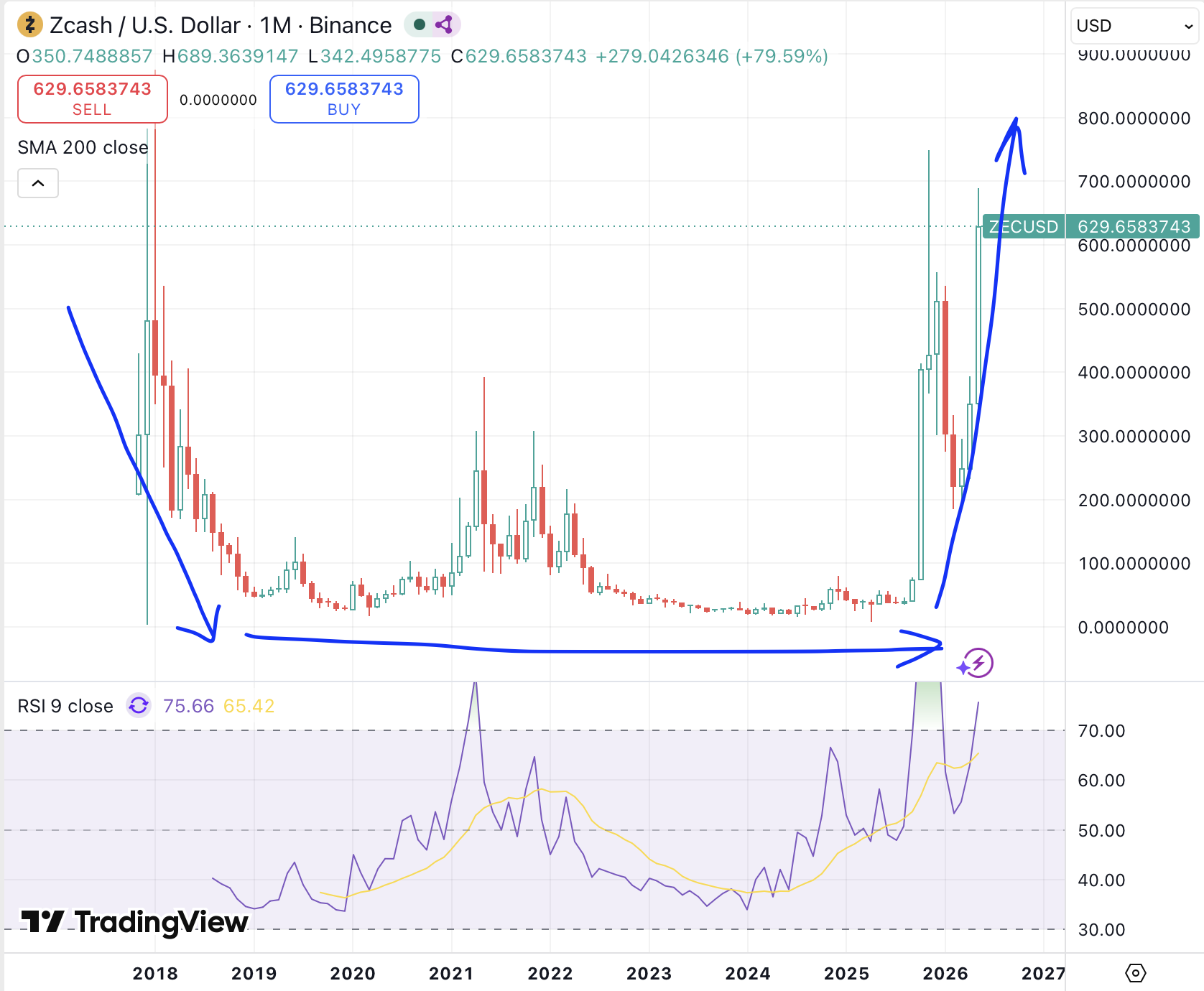
Every time we open a concentrated liquidity position, we effectively cap the upside at the upper bound of the selected price range. In exchange for fee income, we intentionally assume the risk of a sustained asset rally breaking above this boundary.
Because certain coins can occasionally go parabolic, the upside you forfeit from a concentrated LP position can be 2x or 3x your principal–stretching to 10x or even 100x in extreme, rare cases.
2.4.2 Downward Price Risk
While capping your upside in a rally is frustrating, the math becomes far more brutal when market prices collapse. To illustrate this downward price risk, the table below tracks the extended performance of two different LP positions over a longer time horizon–monitoring what happens to the capital long after the positions are closed:
Current Value: The dollar value of the tokens and earned fees withdrawn from the liquidity pool at position close, valued at current market prices. This assumes you simply held those returned tokens in your wallet until now.
Current PnL: The profit or loss of this “withdraw-and-hold” scenario, representing the extended performance of your LP journey (\(\text{Current Value} - \text{Sent Value}\)).
| Pid | Sent Value | Withdrew Value | HODL Value | Current Value | pPnL | hPnL | Current PnL |
|---|---|---|---|---|---|---|---|
| 1 | $2,502.11 | $2,477.21 | $2,502.11 | $2,751.72 | -$24.90 | $0 | $249.61 |
| 2 | $7,759.59 | $7,621.18 | $7,759.59 | $500.71 | -$138.41 | $0 | -$7,258.88 |
At the moment of closure, both positions lost money in absolute terms, as shown by the negative pPnL values. Simply holding onto the initial tokens would have resulted in zero losses, as indicated by the zero hPnL values.
However, looking at what happened after closure reveals a stark divergence. If we held those returned tokens until today, the misfortune of Position 1 would be completely reversed, turning a small initial loss into a $249.61 profit because the tokens recovered and rallied. The loss from Position 2, on the other hand, would balloon to a catastrophic $7,259. This is because the prices of those returned tokens kept crashing post-closure, and holding onto them meant disaster.
💡 Downward Price Risk
Every time we open a concentrated liquidity position, we risk absorbing maximum downside exposure as price falls toward the lower bound. In exchange for fee income, we assume the risk of a sustained asset sell-off breaking below this boundary, leaving us 100% allocated to the depreciating asset.
Because 99.9% of cryptocurrencies eventually go to zero, you must be careful about which token pairs you choose to provide liquidity into.
2.4.3 Impermanent Loss
You are subject to price risk the moment you open an LP position. To see this, let’s look at how price affects the unrealized PnL of four fictitious live positions in the table below:
- Liquidity Value: The dollar value of the tokens currently sitting in your position.
- Fee Value: The dollar value of all earned fees so far.
- Position PnL (pPnL): The unrealized profit or loss of the LP position (\(\text{Liquidity Value} - \text{Sent Value} + \text{Fee Value}\)).
- Impermanent Loss (IL): The performance penalty of your position relative to a counterfactual HODL strategy, exclusive of all fee income (\(\text{Liquidity Value} - \text{HODL Value}\)). The word “impermanent” emphasizes that this opportunity cost is unrealized and constantly changing as prices move around.
| Pid | Sent Value | Liquidity Value | Fee Value | HODL Value | pPnL | IL |
|---|---|---|---|---|---|---|
| 1 | $5,000 | $4,973.54 | $29.09 | $5,000 | $2.63 | -$26.46 |
| 2 | $5,000 | $4,973.54 | $21.87 | $5,000 | -$4.59 | -$26.46 |
| 3 | $5,000 | $5,112.27 | $10.34 | $5,216.29 | $122.61 | -$104.02 |
| 4 | $5,000 | $5,012.27 | $15.84 | $5,035.11 | $28.11 | -$22.84 |
In Positions 1 and 2, we provided $5,000 USDC single-sided into an ETH-USDC pool from the top of the range. As the price of ETH dropped, the positions swapped USDC for ETH, dragging their values below $5,000 and generating an IL of -$26.46.
In Positions 3 and 4, we deployed $5,000 two-sided near the middle of the range by splitting it equally between ETH and USDC. As the price of ETH ground up, the positions automatically sold ETH for USDC. The values of the positions went up, but lagged behind HODL, generating an IL of -$104.02 for Position 3 and -$22.84 for Position 4.
Notice that no matter which direction the price moves–except when it returns to the exact level at which you opened the position–your position’s liquidity value is strictly less than what your HODL value would have been. IL is the penalty LPs pay relative to just holding the underlying tokens.
On the other hand, LPs receive fee income to compensate for IL. Let’s add up the liquidity value and fees to see if any of the four positions were beating HODL at the time of the snapshot:
| Pid | Liquidity Value + Fee Value | HODL Value | Which wins? |
|---|---|---|---|
| 1 | $5,002.63 | $5,000 | LP |
| 2 | $4,995.41 | $5,000 | HODL |
| 3 | $5,122.61 | $5,216.29 | HODL |
| 4 | $5,028.11 | $5,035.11 | HODL |
We see that only Position 1 was beating a simple buy-and-hold strategy. Indeed, it is not easy to beat HODL, especially with a single, standalone LP position. We will introduce strategies that attempt to beat HODL in later chapters.
As time passes, the numbers will continuously shift, but based on this data, here’s how I would rank the performance of the four positions:
- The best performing position was Position 1 because its pPnL was positive and it was beating HODL.
- The second best performing position was Position 4 because its pPnL was positive and it came incredibly close to matching HODL, missing the benchmark by only $7.00.
- The third best performing position was Position 3 because its pPnL was positive, although it lagged far behind its HODL benchmark due to heavy IL.
- The worst performing position was Position 2 because its pPnL was negative and it failed to beat HODL altogether.
2.5 The Reality of the Arena
Providing liquidity is one of the few yield strategies in DeFi where the returns are structurally grounded–in trading volume, real fees, and a real demand to exchange tokens. But those returns are not automatic, and this chapter has shown why. Loss-Versus-Rebalancing (LVR) chips away at your principal. Impermanent loss (IL) penalizes every price move away from entry. Out-of-range positions earn nothing while the market moves on without them. And when prices collapse, leaving a position open allows the damage to compound relentlessly.
None of this is fatal–but it means profitable positions demand active management. Most LPs lose because they treat a dynamic, adversarial environment as a passive playground. The LPs who win treat every position as a live trade: with a target, a stop, and an exit. The rest of this book is about building that discipline.
NVDAx is the on-chain ticker for xStocks’ tokenized representation of NVIDIA stock. For more information, visit xStocks at https://defi.xstocks.fi/.↩︎
WETH, or Wrapped ETH, is a 1:1 representation of ETH. It exists because native ETH cannot be issued on chains other than Ethereum. Since ETH and WETH hold equal value and can be wrapped or unwrapped 1:1, the two are often used interchangeably.↩︎
Its contract address is
0xc6962004f452be9203591991d15f6b388e09e8d0. You can check how many tokens the pool currently holds by visiting its Arbiscan page: https://arbiscan.io/address/0xc6962004f452be9203591991d15f6b388e09e8d0.↩︎Glassnode report: https://insights.glassnode.com/the-week-onchain-week-31-2023/. Sandwich bots front-run and back-run retail swaps by placing transactions immediately before and after a target trade, profiting from the price impact that trade creates.↩︎
While the Uniswap protocol did not collect revenue from swaps, Uniswap labs charged a 0.15% to 0.25% interface fee on swaps made through its web app and mobile wallet. This fee was removed on December 27, 2025. For details, see Uniswap Labs’ fee documentation: https://support.uniswap.org/hc/en-us/articles/20131678274957-What-are-Uniswap-Labs-fees.↩︎
Meteora DLMM protocol fees: https://docs.meteora.ag/overview/products/dlmm/dlmm-fee-calculation#dlmm-protocol-fees↩︎
Milionis, J., Moallemi, C., Roughgarden, T., and Zhang, A. (2022). Automated Market Making and Loss-Versus-Rebalancing. Available at: https://arxiv.org/abs/2208.06046.↩︎
Wu, F., Sui, D., Thiery, T., and Pai, M. (2025). Measuring CEX-DEX Extracted Value and Searcher Profitability: The Darkest of the MEV Dark Forest. Available at: https://arxiv.org/abs/2507.13023. The study covers the period from August 2023 to March 2025 on Ethereum. It also found that just three searchers–Wintermute, SCP, and Kayle–captured approximately 73% of all extracted value, illustrating how highly concentrated this activity is.↩︎
0xfbifemboy and thiccythot (2023). Follow-Up Analyses of LP Profitability in Uniswap V3. Available at: https://crocswap.medium.com/follow-up-analyses-of-lp-profitability-in-uniswap-v3-2cfc8c5e014e↩︎
Fritsch, R. and Canidio, A. (2024). Measuring Arbitrage Losses and Profitability of AMM Liquidity. Available at: https://arxiv.org/abs/2404.05803. The paper also found that Uniswap v2 pools are more profitable for passive LPs than their v3 counterparts–a striking result given that v3 was designed for greater capital efficiency. It also found that while faster block production reduces arbitrage losses, the rate of improvement varies significantly across trading pairs.↩︎
Atis E. (2023). Conceptualizing Uniswap v3 LP Profit and Loss. Available at: https://atise.medium.com/conceptualizing-uniswap-v3-lp-profit-and-loss-ecbae6e09644. As the author notes: “If liquidity on Uniswap is deeper than the liquidity elsewhere, the DEX price determines the market price, not the other way around. As a result, the toxic flow is smaller than the uninformed flow.”↩︎
Some DEXs go a step further by rewarding LPs with native governance tokens on top of trading fees. For example, on Trader Joe, pools marked with a green “REWARDS” tag distribute both swap fees and JOE tokens to LPs. By contrast, some DEXs, such as Ramses and Velodrome, reward LPs solely with governance tokens while directing all trading fees to holders of their vote-escrowed governance tokens. Be careful with these protocols, as the prices of most governance tokens tend to drift toward zero over time. It’s generally wiser to claim and sell earned governance tokens frequently rather than hold them.↩︎
Airdrops are distributions of free cryptocurrency tokens. DeFi projects use airdrops to market new platforms, bootstrap liquidity, reward early adopters, engage community members, and decentralize protocol governance.↩︎
Perp DEXs, short for perpetual decentralized exchanges, are smart-contract-powered platforms that allow users to trade leveraged perpetual swaps against liquidity provided by LPs.↩︎
When a platform force-closes large negative PnL positions with low margin, it may also reduce or close positions on the opposite side. Platforms typically rank accounts based on the ratio of unrealized PnL to margin or total assets; if your ratio is high, you move closer to the front of the ADL queue.↩︎
Do your own research, as spot DEXs are not immune to exploits. For example, Raydium–the second-largest DEX on Solana, with more than $1 billion in TVL as of May 2026–was exploited on December 16, 2022, resulting in roughly $5.5 million in stolen user assets. Likewise, on May 22, 2025, Cetus Protocol, the largest DEX on the Sui blockchain, suffered a $223 million exploit. Detailed analyses are available from CertiK’s Raydium incident report (https://www.certik.com/skynet-report/raydium-protocol-exploit-incident-analysis) and Halborn’s Cetus hack analysis (https://www.halborn.com/blog/post/explained-the-cetus-hack-may-2025).↩︎
High supply rates exceeding 10% dilute quickly, usually within a day or two. To increase your yield in a money market, you must loop your positions more aggressively. However, this significantly increases both your liquidation risk and the effort required to manage the position.↩︎
Although Uniswap’s core smart contracts have never been hacked or drained, the protocol and its users have been impacted by vulnerabilities in third-party tokens, front-end interface exploits, fake airdrop advertisements, social engineering, and widespread phishing attacks. As an LP, you must remain vigilant against these tangential risks.↩︎
Loesch, S., Hinman, N., Carter, M., Cock, G., Liszewski, M., and Adams, H. (2021). Impermanent Loss in Uniswap v3. In the sample studied, LPs earned $199.3 million in fees but suffered $260.1 million in impermanent loss, a net deficit of $60.8 million versus simply holding.↩︎
Heimbach, L., Schertenleib, E., and Wattenhofer, R. (2022). Risks and Returns of Uniswap V3 Liquidity Providers. Available at: https://arxiv.org/abs/2205.08904.↩︎
In crypto, the ‘blue-chip’ label often has an expiration date. Market history is littered with assets that were once deemed high-grade before fading into irrelevance (e.g., AVAX) or collapsing catastrophically (e.g., LUNA). As of May 2026, I treat Bitcoin–including its wrapped versions like cbBTC and WBTC–as the only true blue-chip asset in the space.↩︎
Welcome
Log in to access this book.